
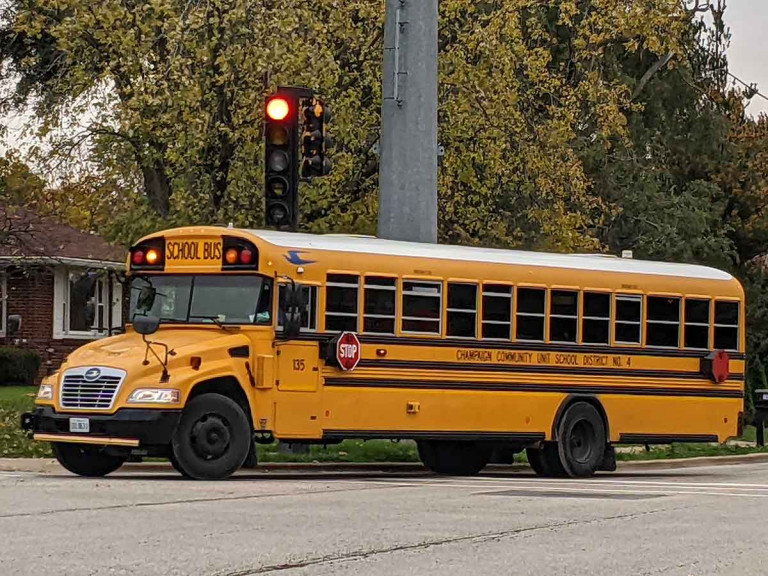
School transportation operates under overlapping federal, state, and local requirements. Federal rules address areas such as vehicle safety standards and commercial driver licensing, while states and school districts often establish additional rules concerning routes, stops, student conduct, driver qualifications, loading procedures, and transportation eligibility.
School Bus Safety Rules Come From Several Levels
The National Highway Traffic Safety Administration establishes federal motor-vehicle safety standards for school buses. NHTSA notes that school buses include features such as flashing lights, cross-view mirrors, stop arms, protective seating, and structural protections.
Parents researching transportation questions may also encounter everyday online articles, but the controlling rules usually come from transportation agencies, state statutes, and district policies.
State law is particularly important around loading zones, passing stopped buses, route requirements, seat belts, and operating practices. NHTSA states that every state prohibits motorists from passing a school bus when its stop arm is extended and red lights are flashing.
Driver Licensing Carries Specific Responsibilities
Many school bus drivers must satisfy commercial driver licensing requirements. FMCSA identifies passenger and school-bus endorsements and states that first-time applicants for a school-bus endorsement are subject to federal entry-level driver training requirements unless an exception applies.
States can impose additional requirements beyond federal minimums. Those may involve training, medical qualifications, background screening, first aid, or other state-specific standards.
A driver comparing official regulations with general web references should verify the current state transportation rules before relying on a simplified online explanation.
| Transportation Area | Typical Rule Source | Main Concern |
|---|---|---|
| Bus construction | Federal standards | Crash protection |
| Driver licensing | Federal and state rules | Driver qualification |
| Bus stops | State/local policies | Safe loading |
| Student conduct | District policy | Order and safety |
Loading and Unloading Deserve Extra Attention
A significant part of school transportation safety involves what happens outside the bus. NHTSA advises children to remain a safe distance from the curb, wait until the bus has completely stopped, and avoid walking behind the vehicle.
Students crossing in front of a bus should remain visible to the driver. NHTSA also warns children not to retrieve dropped objects near the bus without first alerting the driver because the child may be in an area the driver cannot see.
Reports about transportation incidents can spread quickly through general news reading, but responsibility for a particular event depends on the actual facts, policies, applicable laws, and sometimes vehicle or surveillance records.
What People Often Get Wrong About Bus Rules
One misconception is that every school transportation rule is federal. Federal agencies regulate important areas, but many practical duties are created by state law or local district policy.
Another mistake is assuming the bus driver’s responsibilities end once the vehicle stops. Loading and unloading procedures can be among the most safety-sensitive parts of a route.
Families may also assume every student has a universal legal right to district transportation. Eligibility often depends on state statutes, distance rules, disability-related obligations, district policies, or other circumstances.
When Should Legal Guidance Be Considered?
Legal guidance may be appropriate after a serious crash, disputed transportation-related injury, alleged driver misconduct, repeated safety violations, or disagreement about transportation required for a student with a disability.
Districts should also obtain appropriate advice when changing transportation policies that affect access, student discipline, driver employment, or special-education services. Different legal rules may apply to each issue.
Frequently Asked Questions
Do school bus drivers need special endorsements?
Drivers covered by federal commercial driver rules may need the appropriate passenger and school-bus endorsements. State requirements can add further qualifications, so the driver’s licensing jurisdiction should always be checked.
Are seat belts required on every school bus?
Federal requirements differ depending on bus size, and states may impose additional rules. NHTSA explains that smaller school buses have federal belt requirements while large buses traditionally use compartmentalized seating protection.
Can a district change a student’s bus stop?
Districts commonly have authority to establish routes and stops under state and local rules, but the decision may still need to satisfy applicable safety, disability, or transportation requirements.
Check the Rule That Applies to the Actual Route
School transportation safety depends on more than the bus itself. Driver credentials, vehicle condition, stop placement, loading procedures, student supervision, and district policies all interact. Parents, drivers, and administrators should use current state and federal transportation sources when a question arises instead of assuming a rule from another district or state applies locally.
This article provides general legal information and is not a substitute for advice from a qualified attorney.